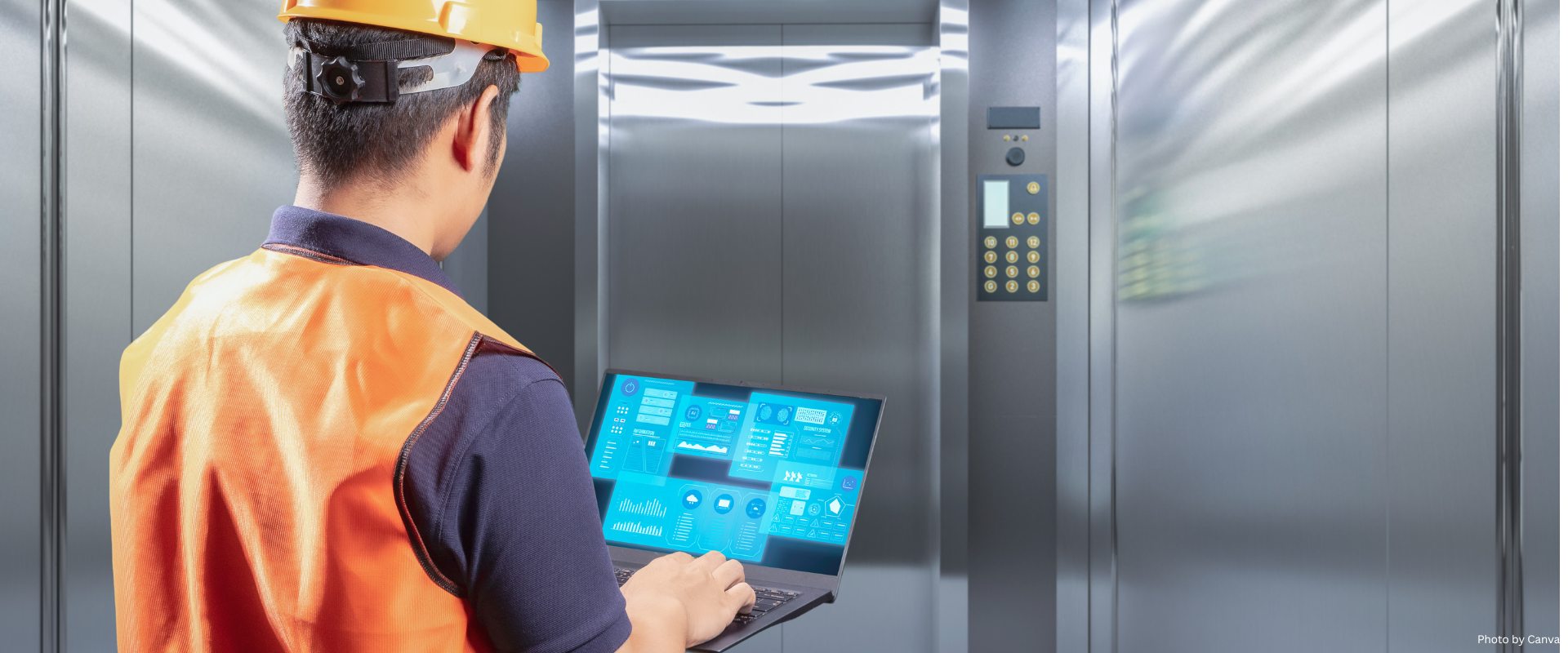
The urban landscape is often defined by its skyline, a jagged collection of glass and steel reaching for the clouds. While the world obsesses over the software developers and data scientists working inside those buildings, a different kind of elite professional keeps the entire engine of the city running. If you have ever stood in a lobby waiting for those elevator doors to slide open, you were looking at the gateway to one of the most stable, high-paying, and AI-proof careers in the modern economy. Elevator technicians are specialized stewards of vertical transportation, combining mechanical mastery with complex electrical engineering to solve the mobility crisis one floor at a time.
For the modern worker trapped in the grind of low-wage service roles or gig-economy uncertainty, this Skilled Boom offers a genuine path to economic freedom. Becoming an elevator technician represents a strategic pivot, allowing you to secure a six-figure income without the crushing weight of a four-year degree. This is a career where the barrier to entry is not a prestigious diploma, but a willingness to master a high-value trade that provides essential infrastructure for every major U.S. city.
The cost of living crisis has made traditional career advice nearly obsolete. While many college graduates are struggling to pay back loans with entry-level salaries that barely cover rent in places like New York or San Francisco, those in precision trades are seeing their value skyrocket. Elevator technicians sit at the very top of this "Skilled Boom" hierarchy. Because high-rise buildings literally cannot function without them, their specialized labor is treated as a critical necessity rather than an optional service.
This creates a level of job security that is rare in the 2026 economy. When you work in elevator technology, you are entering a field with massive academic ROI because the training is often paid for through apprenticeships rather than funded by student debt. You aren't just learning how to turn a wrench; you are learning how to manage sophisticated computer systems, hydraulic pressures, and complex safety protocols that keep millions of people moving safely.
This unique blend of physical and digital skill sets makes the role virtually impossible for AI to replace.
There is a lot of noise about automation replacing the American workforce, but the Automation Boom actually reinforces the value of the elevator technician. While a software program can write code or generate an image, it cannot climb into a dark shaft, diagnose a frayed cable, or recalibrate a sensory motor in a 50-story building. The physical complexity of urban infrastructure requires a level of human intuition and manual expertise that remains out of reach for robotics.
Choosing this path is a way of future-proofing your income. As cities become denser and buildings go higher to accommodate growing populations, the demand for vertical transportation only increases. We are seeing a massive shift toward Smart HVAC and EV Infrastructure, and elevator systems are evolving right alongside them, incorporating more sensors and automation that require human experts for maintenance and robotics implementation. You aren't fighting against technology in this role; you are the one ensuring the technology actually works for the people who live and work in the city.
Navigating the Certification Intelligence
One of the biggest hurdles for workers looking to pivot is the certification intelligence gap. People often waste years and thousands of dollars on "paper" that doesn't actually lead to a job. In the world of elevator technology, the path is much more direct. The industry relies heavily on standardized apprenticeships and specific licenses that serve as a golden ticket to high-paying roles. Instead of a broad liberal arts degree, you focus on the Career Lab approach: identifying the specific certifications that the market is screaming for right now.
The National Association of Elevator Contractors (NAEC) and the International Union of Elevator Constructors (IUEC) provide the frameworks for these career paths. An apprenticeship in this field is essentially a four-to-five-year degree where you get paid to learn. By the time you reach journey-level status, you are often earning more than many mid-level corporate managers, all while possessing a skill set that is portable to any major city in the world. This is the essence of urban economic mobility, a shortcut that bypasses bureaucratic friction for high-value roles.
Making the transition from a low-wage service job to a high-value infrastructure role requires a "Street-Smart" strategy.
You cannot just wait for an opportunity to find you; you have to treat your career like a digital business infrastructure. Start by researching the local chapters of elevator unions in your city and looking for "Precision Trades" recruitment cycles. These windows are often short, so having your documentation, like a high school diploma, basic mechanical aptitude, and a clean driving record, is essential.
While you wait for an apprenticeship opening, you can build your future-proof skills by taking basic courses in electrical theory or becoming familiar with the Robotics Maintenance basics that are becoming standard in the industry. This proactive approach shows that you aren't just looking for a job, but are committed to the Skilled Boom as a lifelong career. The goal is to move from a position of vulnerability to one of power, where your skills are so specialized that you never have to worry about a layoff or a shrinking paycheck again.
The life of an elevator technician is demanding, but the rewards are significant.
You are often the first person on a job site and the last person someone calls when an emergency happens. There is a profound sense of pride in knowing that the city’s movement depends on your expertise. In the Care Boom of urban development, maintaining the systems that allow for accessibility and mobility is a form of community service that pays exceptionally well.
As the urban pivot continues to gain momentum, more workers will realize that the highest-paying roles aren't always found behind a desk. They are found in the mechanical rooms, the hoistways, and the control centers of the world's greatest cities. The elevator technician is the new tech elite because they own the physical reality that the digital world depends on. If you are ready to stop chasing viral metrics and start building a career with cultural and economic integrity, it is time to look toward the trades.
The Skilled Boom is not just a trend; it is a necessary correction to an economy that has undervalued the hands-on expertise required to keep society upright. By choosing this path, you are solving your own cost of living crisis, and becoming a vital part of the city’s DNA.
The doors are open, it is up to you to step inside and start the climb.