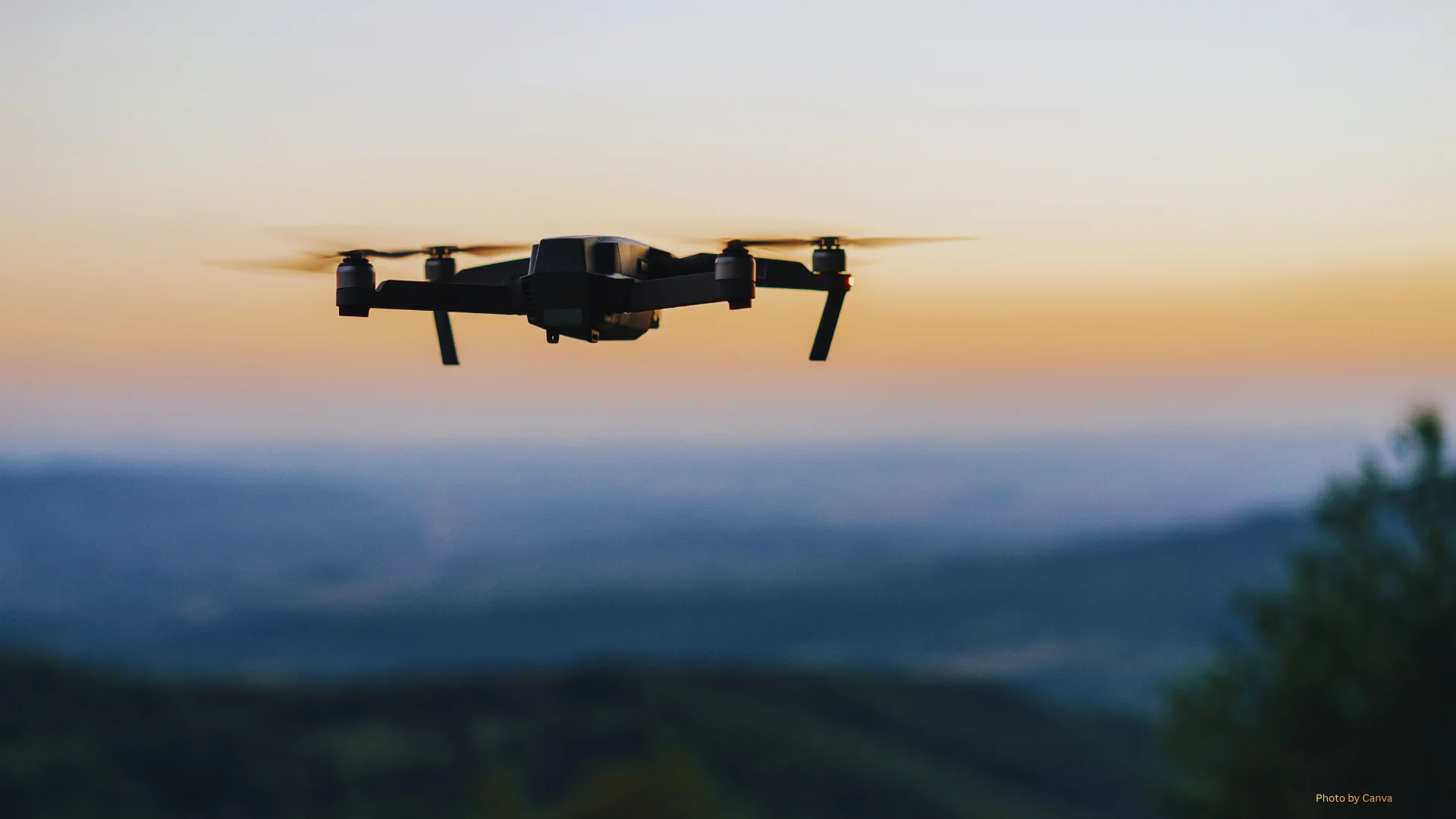
On a stretch of upstate sky between Syracuse Hancock International Airport and Griffiss International Airport in Rome, drones fly 50 miles without a spotter on the ground watching them. The Federal Aviation Administration approved that corridor in 2022, after New York State had spent years building the traffic management system underneath it, and the people who fly in it hold the same basic credential as a teenager shooting real estate photos in Rockland County.
That credential is the FAA Part 107 Remote Pilot Certificate, and the door to it has no diploma requirement at all. The FAA asks that applicants be at least 16, able to read, speak, write and understand English, and in good enough physical and mental condition to fly safely, then pass a 60-question knowledge test at an approved testing center.
For New Yorkers looking at the automation economy from the outside, the drone license is one of the cheapest and fastest credentials on the board. The test runs about $175 at PSI, the FAA's testing vendor, and the federal agency counts 223,634 certified remote pilots on its public tally as of this month. The harder question is what the license is worth once it is in your wallet, and the answer depends on what you pair it with.
How the Certificate Works
The process runs through the FAA's online application system, known as IACRA. Applicants create a profile to receive an FAA Tracking Number, schedule the Unmanned Aircraft General Small knowledge test, known as the UAG, and bring government photo identification on test day. The FAA's testing matrix lists the UAG at 60 questions, a two-hour window and a passing score of 70 percent.
After passing, applicants file Form 8710-13 in IACRA using the 17-digit exam ID from their score report, and the Transportation Security Administration runs a background check. The FAA's own instructions say "a confirmation email will be sent when an applicant has completed the TSA security background check," followed by a permanent certificate by mail once internal processing is complete.
The license does not expire in the usual sense, though it does require upkeep. "Certificate holders must complete an online recurrent training every 24 calendar months," the agency states, and that course is free through the FAA Safety Team.
A Detail for Younger Applicants
The testing matrix sets the minimum age to sit the UAG at 14, two years below the age to hold the certificate. A high school sophomore can take and pass the exam, then apply for the certificate on turning 16, which turns a summer of study into a credential that is waiting the day the birthday arrives.
Where the Work Is in New York
New York has spent heavily to become a drone state. Governor Kathy Hochul's office described the Syracuse to Rome corridor in 2022 as part of a nearly $113 million state investment in uncrewed aircraft systems, and called the New York UAS Test Site, managed by the nonprofit NUAIR, "one of only seven Federal Aviation Administration-designated uncrewed aircraft systems test sites in the nation," according to the governor's announcement.
Ken Stewart, NUAIR's chief executive at the time, pointed to inspections of transportation and utility infrastructure, medical logistics, environmental conservation and public safety operations as the commercial uses the corridor was built to prove. Each item on that list now has a paying customer somewhere in the state.
The New York State Thruway Authority launched a drone program in 2023 for tasks including bridge inspections, with NUAIR as a partner, and its then interim executive director, Frank Hoare, said "the use of drone technology in transportation provides exciting opportunities to improve infrastructure." Drones let an inspector see the underside of a span without closing lanes or hanging a worker from a bucket truck.
Yonkers launched a permanent Drone as First Responder program in March 2026, sending aircraft to emergency calls ahead of patrol cars, with flights handled by pilots from Westchester Drone Ops. Programs like that create steady demand for operators who can fly under pressure and document every flight.
The Corridor and the Upstate Economy
Central New York has stacked advanced manufacturing investments on top of the drone corridor, and the two pull from overlapping talent pools. Our look at semiconductor technician jobs at the Micron site in Clay covered a no-degree path in the same region, and many of the habits that make a good fab technician, procedure, logging and attention to equipment, are the same ones commercial drone clients pay for.
Hope Knight, president and chief executive of Empire State Development, has said "NUAIR has been transformative in New York's efforts to grow our foothold in the uncrewed aircraft systems industry." That support shows up in training capacity across the state, not only in Oneida and Onondaga counties.
Training Options Across the State
The Part 107 exam can be passed through self-study with free FAA materials, though many new pilots want structure and stick time. SUNY Niagara offers a 30-hour Drone Operator Training course for $775 plus materials, built to prepare students for the Part 107 exam, with its next session running from Monday, Oct. 19 through Nov. 23.
For a deeper credential, Mohawk Valley Community College offers an associate degree in Remotely Piloted Aircraft Systems, and the FAA selected the college for its UAS Collegiate Training Initiative in 2022. SUNY also lists a microcredential titled Foundations of Drone Operations and Compliance, and SUNY Westchester has run a three-week drone pilot certification program for students and alumni aged 18 to 24.
Adults who already hold a degree in another field and want to retool may have a cheaper route than they expect. TheStandardNY's guide to the expanded SUNY and CUNY Reconnect program for degree holders notes that aviation sits on the state's high-demand list, which matters for anyone weighing the Mohawk Valley associate degree.
What the License Pays, and What It Does Not
The Bureau of Labor Statistics does not track drone pilots as a separate occupation, so any single salary figure for the job should be treated with suspicion. The closest defensible federal benchmark sits in an adjacent field: surveying and mapping technicians, whose duties the BLS describes as including using "drones to take photos," earned a national median of $54,240 in May 2025, with a high school diploma as the typical entry education.
That comparison points to the real lesson of the field. The certificate by itself is a permission slip, while the paycheck comes from the trade it is attached to, whether that is surveying, roof and solar inspection, insurance claims, construction progress mapping, agriculture or public safety. A licensed pilot who can also produce a survey-grade map, read a thermal image of a solar array or write an inspection report is selling a service rather than flight time.
Readers who have followed our coverage of FAA air traffic controller hiring will recognize the pattern: the federal government sets the credential, and the employer decides what it is worth.
The Rule That Could Change the Market
Most commercial drone flying today still requires the pilot or an observer to keep the aircraft in sight. The FAA proposed a new rule in August 2025, informally called Part 108, to normalize flights beyond visual line of sight, the kind of operation the Syracuse to Rome corridor was built to test. As of this weekend no final rule has been published in the Federal Register, and the timing remains uncertain.
If and when it arrives, long-range inspection, delivery and emergency response flights would become far easier to run at scale, and those operations would need pilots who already understand airspace, logs and compliance.
A Sensible First Move
For someone with no degree and no aviation background, the low-risk sequence is to study the free FAA material, pass the UAG, then pair the certificate with one specialty that a local employer already pays for. Calling a surveying firm, a roofing contractor or a county emergency management office before buying an expensive aircraft is the cheapest market research available.
The FAA registry lists 367,848 commercial drones. Each of them needs a certified pilot, and the test to become one costs about the same as a week of groceries.