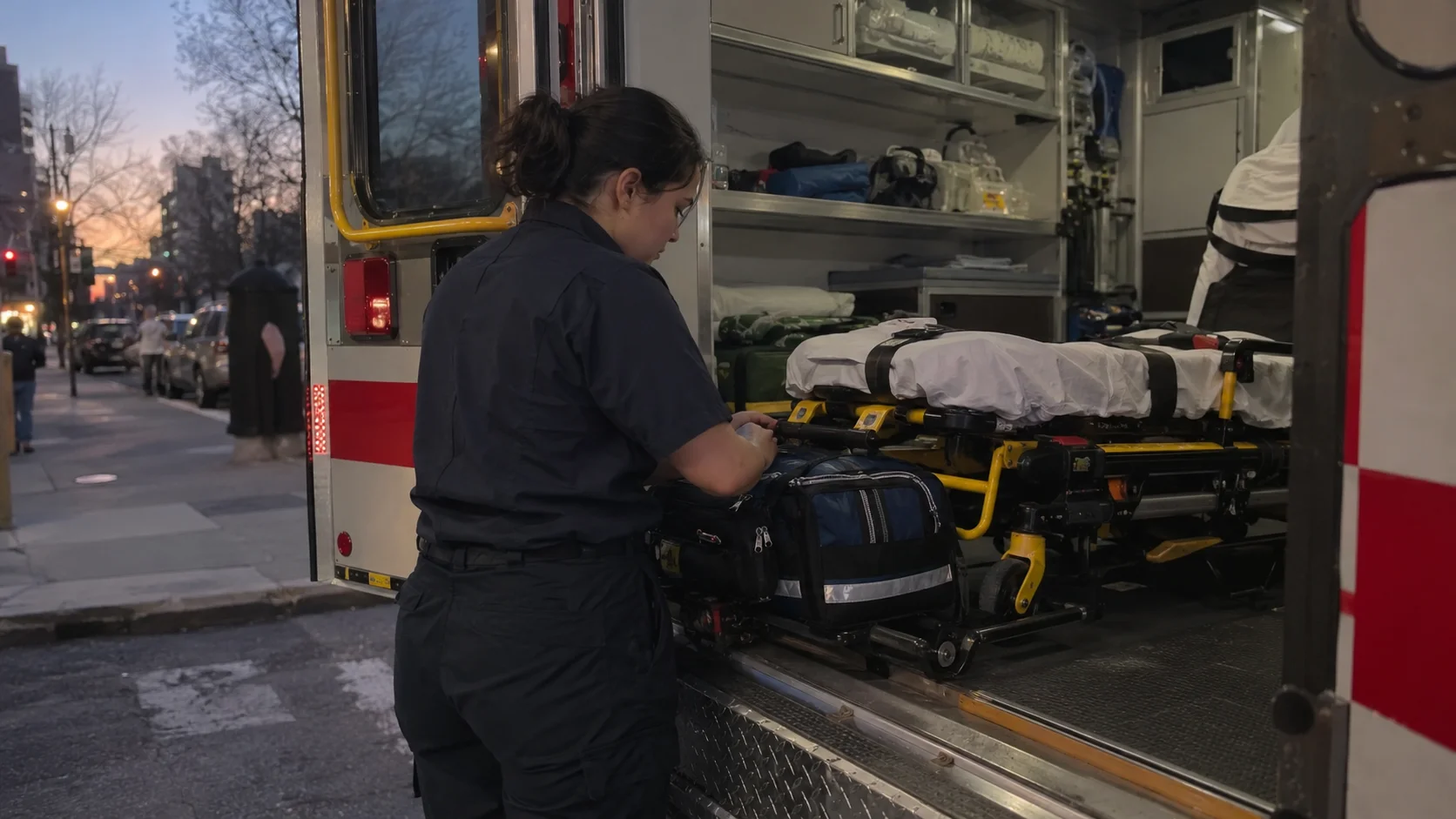
The salary line on FDNY's recruiting page starts before the certificate does. Someone hired into the department's EMS Trainee title earns $36,330 for up to three months while attending an academy that runs about 17 weeks, covering classroom instruction, ambulance rotations, hazardous materials training and an emergency vehicle operators course. After that, base pay moves to $43,932 to $49,816, and after five years it reaches $68,700 to $76,028, before overtime, shift differentials and meal money.
The entry requirement is a four-year high school diploma or its equivalent, plus six months of full-time work, honorable military service or 15 college credits. No residency rule applies, U.S. citizenship is not required as long as the candidate has a Social Security number, and there is no maximum age.
That is one door into emergency medical services, a field where New York needs people in every county. This Care Boom guide covers what the state requires, how the city route works, how to take the course for free elsewhere in the state, and where the job leads.
What New York Requires
EMT certification in New York is governed by Title 10 of the state's health regulations. Section 800.6 sets three conditions for initial certification: a candidate must be at least 17 years old prior to the last day of the month of the exam, must complete a state-approved course given by a state-approved course sponsor, and must pass both a practical skills evaluation and a cognitive examination approved by the Department of Health. Both exams have to be passed within two years of the course end date the department assigns.
No part of that list asks for a degree. The Bureau of Labor Statistics notes that EMT-Basic programs typically take less than a year, and many New York courses fit inside a single semester. At SUNY Niagara, for example, the fall 2026 original course runs from September 9 to December 7 on Monday and Wednesday evenings, with a Saturday section in Lockport, and the state exam is set for December 17.
The City Route: Hired Before You Are Certified
FDNY recruits for two entry titles. The EMT title is for people who already hold a New York State Department of Health EMT-Basic or paramedic certification. The EMS Trainee title is for people who do not, and it is the route that turns the certification problem into a paid job.
The details sit on the department's EMS careers page. Trainee candidates must be at least 17 by the last day of the application period and must hold a New York driver's license by appointment, and moving violations, suspensions or accidents can disqualify an applicant. Current EMT certificate holders from any state are not eligible for the Trainee title, since they are expected to apply as EMTs.
Applications go through the city's civil service exam system, and the exam is offered about once a year. The most recent filing period closed August 7, 2026, so candidates aiming for the next cycle should watch the Department of Citywide Administrative Services exam schedule and use the months in between to build the six months of full-time work history the title requires.
The benefits package is the part that changes household math. FDNY lists more than 20 health plans, pension vesting after five years with full benefits after 25 years of service, and deferred compensation and 401(k) options, alongside veterans' credits for those who qualify.
The Upstate Route: A Free Course Through an Agency
Outside the city, the most direct way to cut the cost of the course to zero runs through a local ambulance squad or fire company. Under the state's EMS course funding policy, issued January 14, 2020, students in basic life support courses are eligible for Bureau of EMS reimbursement when they are members or employees of agencies the Department of Health recognizes as providing EMS on a routine and ongoing basis, with an assigned agency code. Students verify membership on form DOH-3312, which the course sponsor must place in the student file by the third session.
The effect shows up plainly in county price lists. Broome County's EMS training program charges affiliated students $0 for the original EMT course and non-affiliated students $800. SUNY Niagara lists its original course at $1,095 and says firehall and EMS-affiliated participants are often eligible for state reimbursement, which the college waives up front for students who pass the class, the skills exam and the first available state exam.
For someone without $800 to spare, that makes the volunteer squad a practical first stop. Membership costs time on shifts and calls, and in return it can cover tuition, provide supervised field experience and produce the references that paid services look for when they hire.
Starting in High School
Capital Region BOCES is launching a one-year EMT course for area high school students beginning in the 2026-27 school year at its Albany and Schoharie career and technical education campuses, with graduates eligible to sit for the state EMT-Basic exam. "There may be no more critical shortage of workers than in emergency medicine," Jeff Palmer, the BOCES director of career and technical education, said in a December 2025 announcement reported by The Mountain Eagle.
Because the state minimum age is 17, a senior who finishes a BOCES or high school EMS program can test and certify before graduation, then apply to a paid service or to FDNY with a credential already in hand.
What the Work Pays and Where It Leads
Nationally, the Bureau of Labor Statistics put the median annual wage for EMTs at $44,470 in May 2025 and for paramedics at $60,600. The agency projects employment for the two occupations combined to grow 6 percent from 2025 to 2035, with about 18,200 openings a year.
The gap between those two medians is the career ladder. Paramedic training builds on EMT experience and qualifies a provider for advanced life support, including medications, cardiac monitoring and airway procedures. At FDNY, an EMT who completes probation can file for the next promotional exam to paramedic, can sit for the lieutenant exam after three years, and can take the promotional exam for firefighter if they meet that title's requirements.
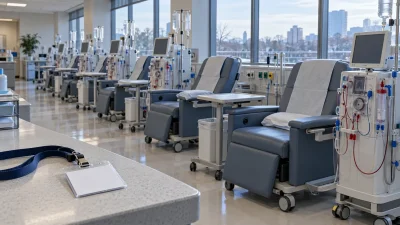
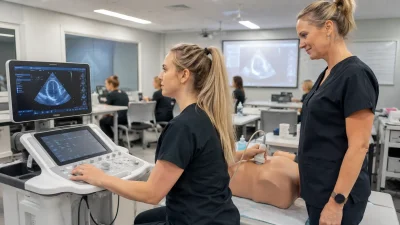
EMS work also opens hospital doors. Emergency departments, dialysis units and surgical teams hire people who can stay calm with a sick patient, and readers comparing options can look at our guides to dialysis patient care technician and sterile processing and surgical technology, two other Care Boom paths that start without a degree.
How to Start This Month
In New York City, the first step is a calendar note for the next FDNY EMS exam filing period and a check that your work history will reach six months of full-time employment by its last day. Anyone who already wants the certificate can enroll in a state-approved course at a CUNY continuing education program or a private training center and apply for the EMT title instead.
Elsewhere in the state, the first call goes to the nearest volunteer ambulance corps or fire company to ask whether it sponsors members for EMT courses and holds an active state agency code. The second goes to the county EMS office or a community college to find the next course start date. Bring a high school diploma or equivalency, a driver's license and the patience for a semester of nights and weekends; the state exam, a license and a first shift follow from there.