
Two of the most-watched surfaces in sports right now were built by hand. The outfield grass cut into crisp diagonal stripes for a summer doubleheader, and the sheet of Stanley Cup ice so smooth it looks like glass under the lights. Fans see the players. They almost never see the people who made the playing surface possible, the ones who were there at dawn and will be there long after the final out or the final horn. Those people have job titles, certifications, and in a lot of cases, paychecks that would surprise you. And here is the part Sonic Boom cares about most: you do not need a four-year degree to do this work.
This is classic Skilled Boom territory, the kind of overlooked, hands-on career the Career Lab exists to put on your map. Keeping a field or a rink at professional standard is a genuine craft, with a certification ladder you can climb on experience instead of tuition. The two lanes are turf and ice. Let us walk both, with real New York numbers and the honest version of what it takes.
A professional sports field is not mowed. It is managed. The people who run it, the groundskeeper crews and the sports turf manager above them, are part agronomist, part meteorologist, and part mechanic. The work is soil testing, irrigation, drainage, fertilization, pest and disease control, and reading a weather forecast to decide what the grass needs before a heat wave or a downpour hits. Done right, it keeps athletes from blowing out a knee on a bad patch of footing. Done wrong, it makes the highlight reel for the wrong reasons.
The on-ramp is refreshingly open. The Sports Field Management Association offers a free, self-paced turfgrass science certification course, available to anyone willing to join as a student member for a token fee. Finish it and you have a certificate you can hand an employer to get hired for seasonal and crew work at a sports facility. From there the climb is experience-driven: crew member, assistant, head groundskeeper, then field operations leadership. The capstone credential is the Certified Sports Field Manager (CSFM) designation, which you qualify for through documented experience rather than a college transcript. In New York, sports turf managers average around $66,000, with experienced managers and stadium-level roles reaching well past $100,000, and some postings in the state ranging up to roughly $131,000. A common add-on that raises your value is a state pesticide applicator license, since chemical and disease management is part of the job.
Nobody majors in outfield grass. The people who run professional fields got there by getting on a crew, learning the science on the job, and stacking certifications that prove it. The diploma is optional. The skill is not.
A hockey rink is even less natural than it looks. Under that sheet is a refrigeration plant, miles of chilled piping, and a humidity-controlled building, all tuned by people who understand the system cold. The ice technician is the one who makes and maintains the surface: building it up in thin painted layers, monitoring temperature and depth, and running the ice resurfacer between periods to leave it flawless. It is hands-on, mechanical, early-morning, deadline-driven work, and at the arena level it overlaps directly with the building trades. The same skilled changeover crews we profiled in our look at the no-degree trades that run Madison Square Garden are flipping that floor from hardwood to live ice on a clock.
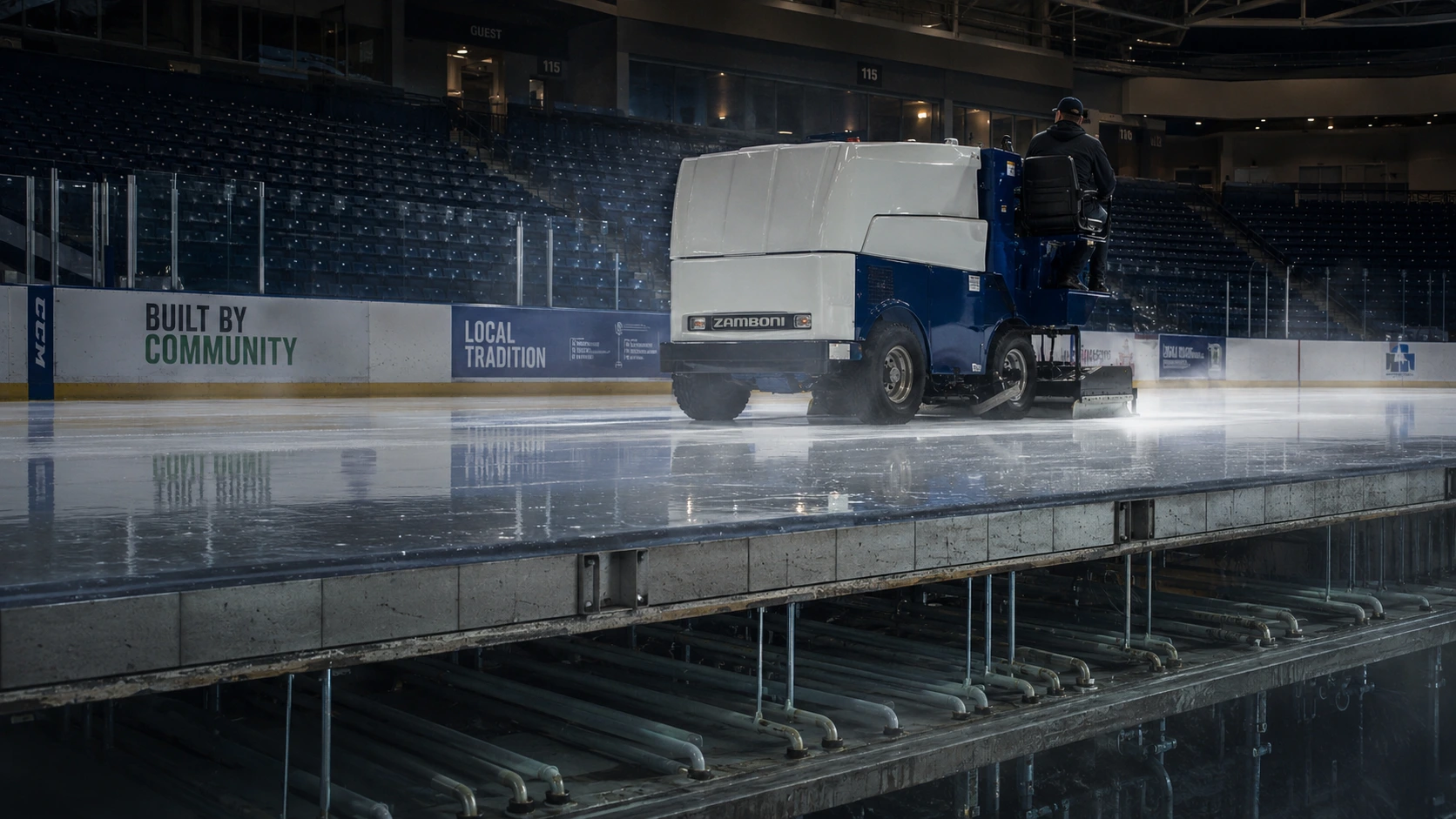
The credential here is specific and respected. The United States Ice Rink Association offers the Certified Ice Technician (CIT) designation, recognized across the sport as the top professional standard for ice operations, built from three focused courses: Basic Arena Refrigeration, Ice Making and Painting Technologies, and Ice Maintenance and Equipment Operation. None of it requires a college degree. Entry roles often start around $22 to $25 an hour and will train you if you bring mechanical aptitude and a valid license, and the field rewards anyone who understands refrigeration. As you move into lead ice tech, head operator, and rink management roles, the ceiling climbs sharply. Some salary data puts experienced resurfacer operators and ice managers comfortably into six figures, particularly at busy multi-sheet or arena facilities.
Here is the honest framing, because Sonic Boom does not dress up a job to sell it. You will see some elite postings, especially at the very top of pro and college sports, that prefer or list a degree in turf management or horticulture. That preference is real. But it is not the only road, and it is not the entry requirement for the field. The actual ladder in both turf and ice is built from short, affordable certifications plus logged experience: the free SFMA turfgrass course and the CSFM on the grass side, the CIT course sequence on the ice side, a pesticide license where it applies, and CPR or first aid where employers ask for it. You can begin earning while you climb, which is exactly the opposite of the borrow-now, earn-later degree model. If you fall in love with the work and decide a degree would open the final doors, you can pursue it later with an employer's help and a paycheck already coming in.
Both careers share the quality that defines every role Sonic Boom chases: they are deeply resistant to automation. A machine cannot smell that a field is about to fungus, feel that the ice is a degree too soft, or improvise when a storm rolls in two hours before first pitch. This is weather-dependent, judgment-heavy, physical work performed against a hard clock, and the value lives in human experience and hands. As software eats predictable desk jobs, the people who can read a living grass surface or tune a finicky ice plant are getting harder to replace, not easier. That durability is the same reason the hands-on sports-health and recovery careers we mapped for the Care Boom are climbing too. Different surface, same principle: skilled hands hold their value.
The fastest way in is seasonal, and the season is now. For turf, complete the free SFMA turfgrass science course, then apply to grounds-crew openings at minor league ballparks, college athletic departments, municipal parks, golf courses, and the field-management contractors that service stadiums. Many people turn a summer crew job into a full-time role by simply being the one who shows up early and learns fast. For ice, register for the United States Ice Rink Association courses and apply to community rinks, training facilities, and arena operations teams, where shifts start before sunrise and managers will train a motivated beginner.
There is also a builder's path worth naming. Both fields run heavily on independent contractors, the companies that install and maintain fields and portable rinks for events and venues. Plenty of experienced groundskeepers and ice techs eventually launch their own service operations, and the practical nuts and bolts of standing up that kind of small business, from a simple web presence to the back-office tools, is the sort of thing our partners at HelpWebmasters.com walk first-time founders through. A craft plus a few years of reputation is a business waiting to happen.
The grass and the ice are not background. They are the stage, and somebody who never needed a degree built them to professional standard. As baseball fills the summer and the last teams chase a championship on perfect ice, remember that every one of those surfaces represents a career path hiding in plain sight. Pick your lane, earn the certification, get on a crew, and let your hands do the talking. In a world racing to automate everything it can, the people who keep the field and the rink game-ready are building something stable, skilled, and very hard to replace. That is the whole point of the Career Lab. The grass is always greener where someone learned to grow it.