There is a free class on Long Island that starts in fifteen days, runs Saturdays through December, and teaches you to install and service the machine New York State has effectively decided every new building will run on. It costs nothing. It does not require a degree. It does not even require that you have touched an HVAC system before.
Almost nobody is talking about it, which is the usual condition of the best doors in this state.
The short answer
New York median pay for heating, air conditioning and refrigeration mechanics is $74,430 a year, with the top tenth clearing $100,680. The state opens roughly 2,120 of these jobs every year. And New York just committed $13 million to training people for clean energy work, with a chunk of it going to programs that teach exactly this. Heat pump technician training is the shortest verified path in the state right now from no credential to a trade that pays above the national average and cannot be done from a laptop in another country.
The class, first, because the deadline is real
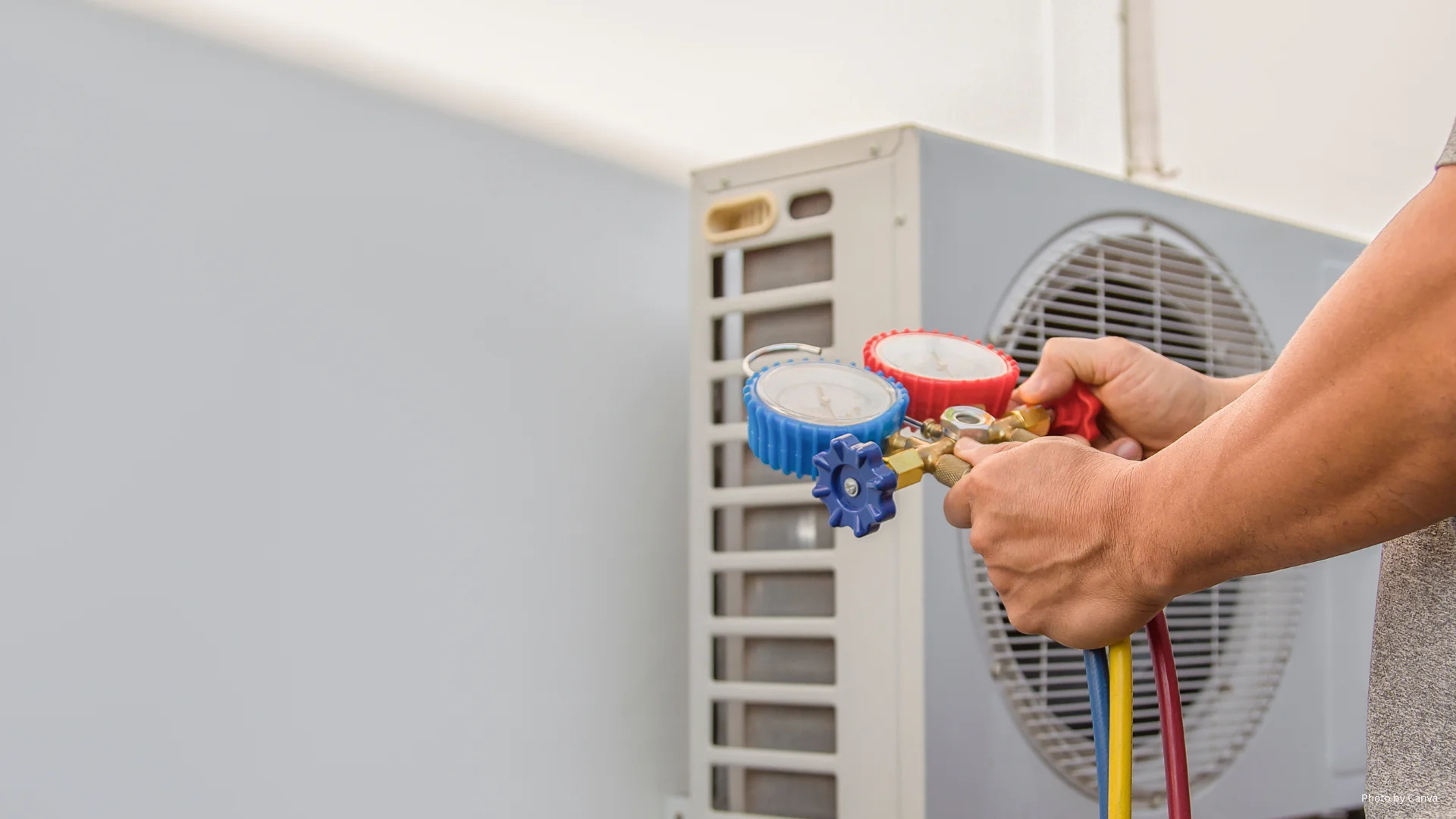
Suffolk County Community College runs a program called Heat Pump Inverter Technology. It is free. The fall session runs September 12 through December 19, 2026, Saturdays, eight in the morning to four in the afternoon. Finish it and you get a college completion certificate, plus the chance to earn seven college credits through work experience and exams that roll into a one-year certificate or a two-year degree. It also preps you for ESCO Institute certification exams, which is the piece employers actually look at.
Prior HVAC experience is preferred and not required. Details and the application form are on the college's free heat pump training page, or you can call 631-451-4114.
If you are not on Long Island, there are other doors. Renaissance Technical Institute in East Harlem runs tuition-free technical programs including HVAC, electrical, plumbing and solar installation, open to anyone seventeen and older, with rolling admissions until a class fills. Northland Workforce Training Center in Buffalo runs an HVAC and refrigeration certificate with SUNY Erie Community College and says most students pay little or nothing based on financial need. Northland's HVAC application window is currently closed, so the move there is the pre-enrollment info session, held Tuesdays at six, Wednesdays at ten and Thursdays at four. Show up to that and you are in the pipeline.
Why the money is showing up now
On July 28, Governor Kathy Hochul and the New York Power Authority announced $13 million to prepare more than 450 New Yorkers for New York clean energy jobs. Three million went directly to six organizations. Ten million went to the State Department of Labor.
The direct awards tell you where the state thinks the work is: $520,000 to Energy Infrastructure Partners in New York City for building operations and efficiency, $500,000 each to Laborers Local 17 in the Hudson Valley and Renaissance Technical Institute in East Harlem, $540,000 to Laborers Local 210 in Buffalo, $500,000 to Northland in Western New York, and $440,000 to SUNY Canton for credit-bearing micro-credentials in heat pumps and drone operations.
"Our clean energy future depends on the people who will build it, and we're committed to preparing them for the good-paying careers of tomorrow." Governor Kathy Hochul, July 28, 2026.
This is the same machinery that put short-term federal training money within reach of New Yorkers this summer, which we broke down in our piece on the eight-week programs Workforce Pell now covers. NYPA says it has put $50 million into this since 2024 and trained more than 3,900 people in the first six months of the current push. A new round of provider applications opened August 17 and closes September 15, with two more rounds after that. Translation for you: more seats in free workforce training New York programs are coming, and the schools will announce them, not the state.
The law underneath all of it
None of this money is charity. New York passed the All-Electric Buildings Act, the first state law in the country requiring all-electric new construction, and in 2026 it started applying to new buildings seven stories and under, plus commercial buildings over 100,000 square feet. The rest of new construction phases in by 2029. Restaurants, hospitals, factories and farm buildings are carved out. Existing buildings are untouched, and if your gas furnace dies tomorrow you can still replace it with gas.
So the law does not create a stampede. What it creates is a floor, in the same way the state's offshore build-out created one for wind technicians working without a degree. Every new apartment building under eight stories going up in this state from here forward runs on electric heating and cooling, and somebody has to install it, commission it, and come back when it stops working in February. That somebody is not going to be an algorithm.
The demand is not only in new construction, either. New York already tells school districts they have to do something when a classroom hits 88 degrees, and districts across the state have been staring at that mandate without the capital to meet it. Our network partner TheStandardNY covered the gap in its report on the classroom temperature law nobody funded. Public buildings that need cooling and cannot afford conventional retrofits are exactly where heat pump work lands next.
Be honest about the numbers
You will read pitches that tell you this field is exploding. It is not, and you should know why before you commit a fall of Saturdays.
Federal labor data puts New York employment in this occupation at about 24,880, projected to reach 25,300 by 2034. That is two percent growth over a decade, well under the eight percent projected nationally. The state is not adding many net HVAC jobs.
What it is doing is replacing people. Roughly 2,120 openings a year against a base under 25,000 means about one in twelve of these jobs turns over annually, mostly to retirement. The workforce is old and the work is changing under it at the same time. That combination is better for a newcomer than raw growth would be, because it means employers are hiring for gaps they cannot fill internally, and the people they are replacing were trained on gas.
The wage picture holds up. New York's $74,430 median runs about twenty-two percent above the national $61,010. The tenth percentile, meaning the bottom of the field, is $48,560. In the New York, Newark and Jersey City metro the median hits $77,990. These are HVAC careers without a degree paying more than plenty of jobs that require one and a loan to go with it.
What to actually do this week
If Suffolk is reachable for you, apply now. September 12 is not a soft date and the class is free, which means it fills.
If you are in the city, call Renaissance Technical Institute at 212-722-5000 and ask about the next HVAC cohort. Rolling admissions means the only bad move is waiting.
If you are in Western New York, put a Northland info session on your calendar this week. The application being closed is not a no; the info session is the actual front door and admissions and financial aid appointments come after it.
Everywhere else, two searches are worth your time. The NYS Clean Heat contractor directory shows you which companies in your county already do this work, which is your employer list before you have a credential. And the State Department of Labor apprenticeship page posts dated application windows for the building trades, including electrical locals whose members increasingly do building electrification skills work as part of the job. Registered apprenticeship New York programs pay you while you learn, which is the difference between a career change and a career fantasy.
The part that matters most
Every few years a lane opens where public money, a legal mandate and an aging workforce line up at the same time. That is what is happening here. It will not stay this easy to get in. Right now there is a state writing checks to train people, a law guaranteeing the work exists, and a free class with open seats and a September start.
The SUNY Suffolk heat pump course is not a golden ticket and nobody should sell it as one. It is a Saturday, fourteen times, in exchange for a credential in a trade paying a median that puts you within reach of six figure trade careers by the time you are experienced. Against the cost of a semester of anything else in this state, that is not a close call.